
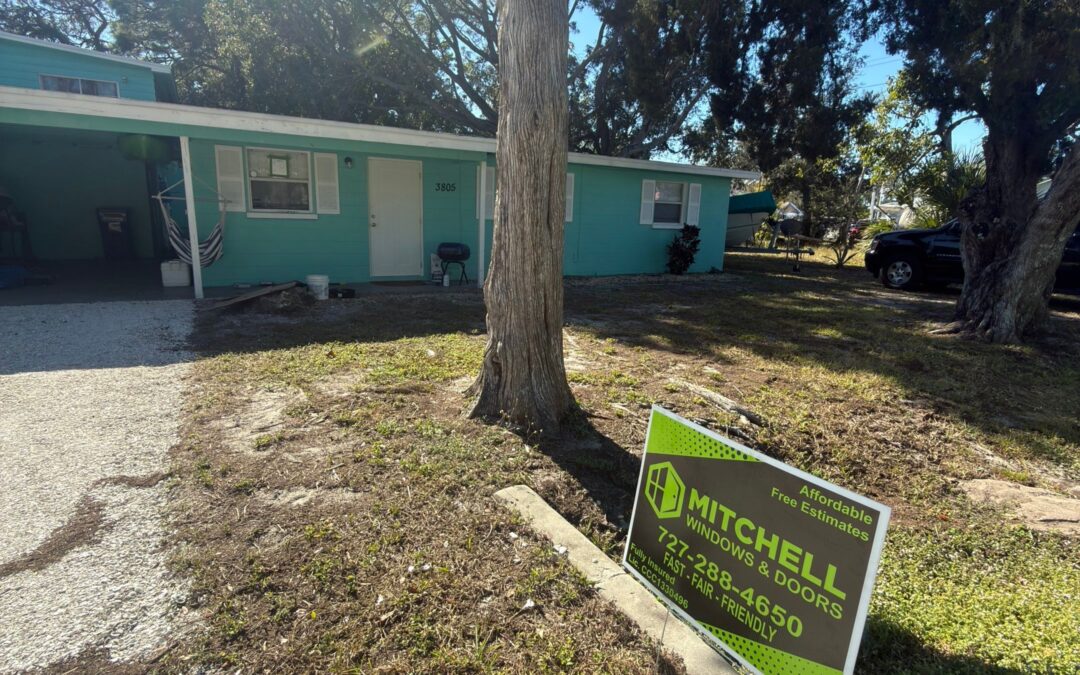
Most people in Florida consider impact doors a safety upgrade, and they are. But what many don’t realize is that installing impact doors in Largo, FL can also lower your insurance costs. The right doors don’t just protect your home during a storm, they also tell your insurance company you’re serious about reducing risk.
Insurance carriers look for homes that are built to withstand severe weather, not homes that require emergency repairs every time a hurricane passes through. They care about the materials you use, how well things are installed, and whether everything meets Florida’s strict building codes. Mitchell Windows and Doors helps you check all those boxes with no guesswork.
Here are the reasons impact doors can lead to lower insurance rates in Florida.
Key Takeaways
- Impact doors in Largo, FL, can unlock major insurance discounts when they meet the right building codes and installation standards.
- Without proper documentation or full-home protection, you could miss out on savings that your home qualifies for.
- Most insurance carriers in Florida care about more than storm prep, they look at how well your home can prove it.
Impact Entry Doors Help Qualify for Full Opening Protection Credit
Impact-rated entry doors do more than protect your home during a storm. They also play a key role in helping you qualify for the full opening protection credit on your wind mitigation inspection, which can lead to significant savings on your insurance premiums.
Entry Doors Are a Critical Pressure Barrier
During a hurricane, the front door is subjected to direct wind pressure that can force open entry points if they’re not properly reinforced. An impact-rated door is constructed with materials and structural components that remain firm when subjected to sudden pressure spikes. That strength helps prevent catastrophic failure that could lead to roof lift or internal structural damage.
Ratings Must Match Florida’s Standards
To meet Florida’s building code and count toward insurance discounts, the door must pass both missile impact and cyclic pressure tests. It needs official documentation such as a Florida Product Approval or a Miami-Dade Notice of Acceptance. Without those, even a strong door won’t be recognized as impact-rated by your insurance provider.
Door Frames and Anchoring Must Withstand Storm Stress
A common failure point in non-rated doors is the frame and hinge system. Certified impact doors in Largo, FL, come with reinforced frames, multi-point locks, and heavy-duty hardware that distribute pressure across multiple areas. These features help the door stay closed and locked when exposed to sustained wind forces.
Verified Documentation Turns an Upgrade Into a Discount
To receive credit, you must show clear proof of compliance. That includes the manufacturer’s product approval number, verified installation records, and often photos taken during or after the install. Without these, inspectors cannot verify the door’s rating, and your home won’t qualify for the top-tier opening protection credit.
Wind Mitigation Credits Are Backed by State Law
Florida law provides homeowners with a clear way to lower their insurance bills. When you install storm-resistant features, such as impact-resistant doors, insurers are required to offer a discount. These savings are not optional and are written into state rules.
An impact door must comply with the Florida Building Code to be considered. It also needs to pass an inspection to prove it meets wind resistance standards. Once that’s confirmed, the credit goes into effect.
This law ensures a fair and consistent process across all insurance companies. If your door passes inspection, your provider must apply the credit. That gives you more control over your long-term costs.
HVHZ Approval Signals Strongest Protection
Some parts of Florida are more vulnerable to stronger storms than others. In places like Miami-Dade and Broward counties, doors must meet special standards called HVHZ. These rules help ensure homes can withstand the worst wind and flying debris.
HVHZ-approved impact doors undergo more rigorous testing than standard models. They must withstand repeated hits and extreme pressure. When a door passes, it shows that it offers the highest level of storm protection available.
Insurance companies use risk scores to help decide how much you pay. A home with HVHZ-rated doors often gets a lower score. That can lead to better insurance rates and fewer claims after major storms.
Mitchell Windows and Doors installs HVHZ-approved products that meet Florida’s toughest rules. Our team ensures that everything is done correctly and is supported by proper documentation. This helps your home stay safer and qualify for strong insurance discounts.
Florida’s Wind Mitigation Form Determines Eligibility
Insurance companies in Florida use a standard form to decide if your home qualifies for wind protection credits. The OIR-B1-1802 form includes specific sections where an inspector notes which upgrades are in place. When an impact-rated door passes inspection, it goes on this form as proof.
Each section of the form lines up with a key part of the home. For doors, the inspector checks if they meet required strength and debris standards. A properly installed product that meets code helps the home qualify for better rates.
Without this form, insurance companies are allowed to assume no protection is installed. That can lead to higher premiums even if your home has strong features. Homeowners with impact windows in Largo, FL, should make sure upgrades are fully documented.
Installation Must Follow Code to Count
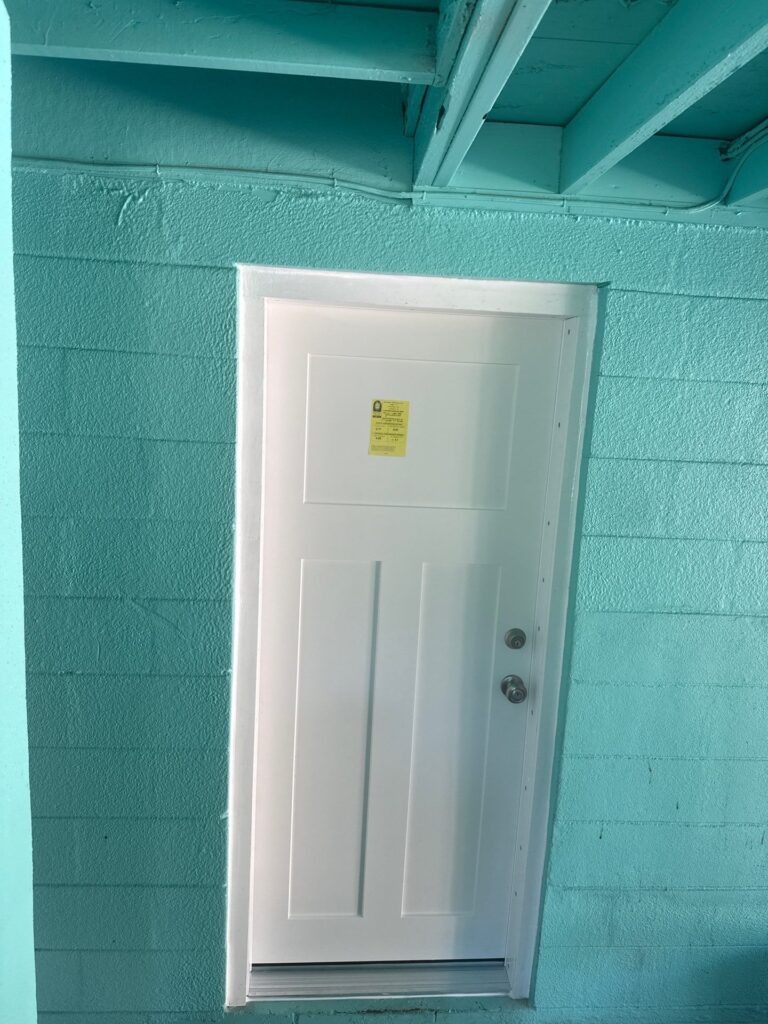
Florida has strict rules regarding the installation of impact doors. A strong door only helps if everything around it is just as solid. That means the frame, hinges, and fasteners must all meet the state building code.
Some installers skip steps or use shortcuts that hurt the door’s strength. This can lead to problems during a storm and keep your home from getting insurance credits. A failed inspection often comes down to small details, such as missing screws or weak anchors.
Insurers want proof that your door can stay in place under pressure. They don’t just look at the door label, they check how it was put in. When the work meets Florida code, the inspector can confirm it on the wind mitigation form.
Let Mitchell Windows and Doors handle the job the right way. Our team adheres to all code rules and utilizes approved materials at every stage. That helps your home stay safer and gives you the best chance at insurance savings.
Full Opening Protection Credit Depends on Complete Door Coverage
Insurance savings in Florida depend on how well your home is protected against wind. Even one unprotected door can lower your credit tier and affect your premium. Full coverage helps you maximize the benefits of your investment in storm-ready upgrades.
Here are the door types that need impact protection or approved coverings to qualify for full credit:
- Side Doors: These are often placed where wind hits hardest, especially near open spaces or corners. They must meet impact standards and be adequately anchored to pass inspection.
- Rear and Patio Doors: Back doors face intense wind exposure and need the same rating as front entries. Inspectors verify the presence of approved glass and reinforced frames that can withstand pressure.
- Utility Doors: These smaller doors often go unnoticed, but they still count on the wind mitigation form. If left unprotected, they lower your home’s credit rating with insurers.
- Service Entry Doors: Often located near garages or laundry areas, these require impact-rated materials and a tight seal. Missing upgrades here can break the chain of full protection.
Leaving one door unprotected risks the discount that full coverage provides. Every opening counts when it comes to insurance savings.
Unverified Features Default to No Discount
Insurance companies do not offer discounts based on appearance. If you can’t prove that your impact door is rated and installed to code, your home is considered unprotected. That keeps your premium higher, even if the door is strong.
This rule helps prevent errors and keeps the system fair for everyone. Insurers use documents to confirm protection and set your rate. Impact doors in Largo, FL, are most effective when you have clear records that demonstrate they meet Florida standards.
Visual checks are not enough during inspections. You need paperwork that shows the product rating and how it was installed. With that in place, you give your home the best chance to qualify for savings.
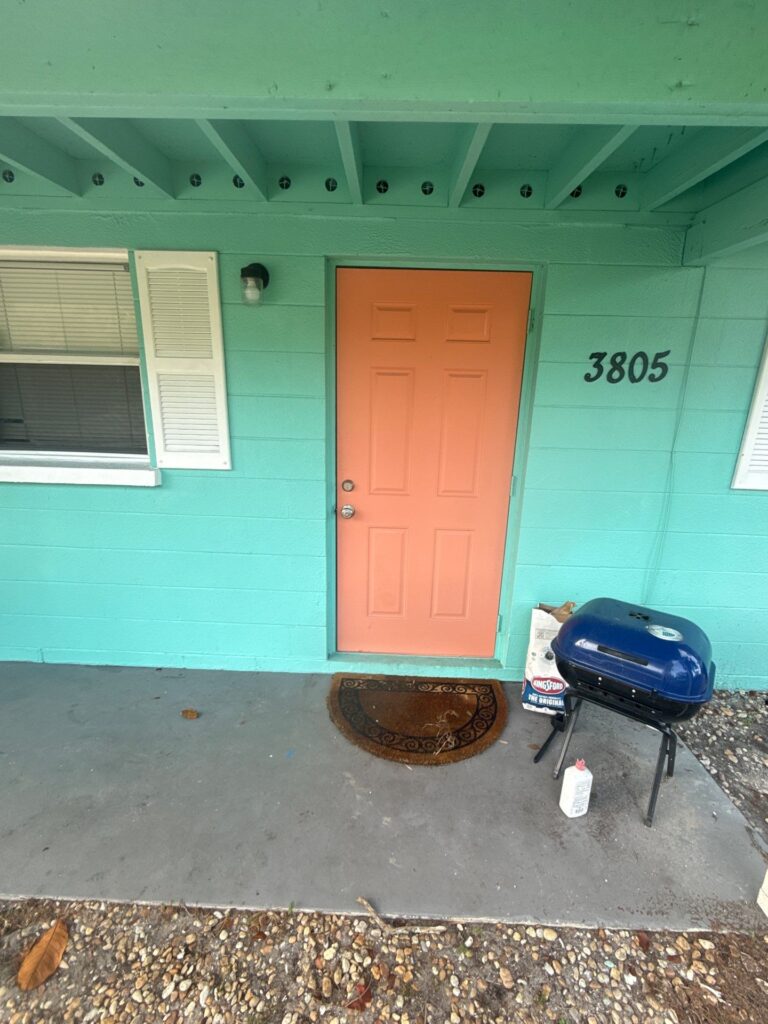
Risk Models Are Based on Historical Losses
Insurance companies look at past storms when setting prices. They study how homes were damaged and what caused the biggest claims. Door failures have been a significant factor in costly losses.
When a door gives out during a storm, wind and water rush inside fast. This can destroy walls, floors, and ceilings in just minutes. Those types of claims are expensive and hard to fix.
Installing impact doors reduces the likelihood of this type of damage. Insurers view the upgrade as a means to mitigate risk across the board. That lower risk is built into the way they set your premium.
Internal Pressure Damage Starts at Entry Points
When hurricane winds break through a door, the real damage often happens inside. Once air rushes in, pressure builds quickly and pushes up against the roof and out against the walls. That sudden force can tear apart parts of the home that were never exposed to the storm.
This type of failure has been reported in past Florida hurricanes. In many cases, the roof didn’t blow off because of outside wind. It lifted because pressure inside the home had nowhere else to go.
Impact doors in Largo, FL, make a big difference in these moments. They’re built to stay sealed even when winds outside are pushing hard. That keeps the pressure outside where it belongs and lowers the risk of major structural damage.
Partial Protection Offers Lower Savings
Wind mitigation discounts in Florida aren’t all or nothing. You can still earn some savings with partial upgrades, but the greatest benefits are realized when every opening is secured.
Missing Doors Leave Risk Gaps
When even one exterior door isn’t impact-rated or properly covered, the home stays vulnerable. Wind can target the weakest point, which puts the rest of the structure at risk. Insurers factor this into their pricing models and reduce the discount accordingly.
Full Coverage Signals Long-Term Risk Reduction
Insurance carriers seek homes that are constructed to withstand repeated storms without incurring major damage. When every opening is protected, it lowers the chance of a claim after each hurricane season. That gives insurers more confidence and homeowners better rates.
Mixed Installations Create Proof Challenges
If only some doors are rated or documented, inspections get harder to pass. Incomplete records can slow down the review process and may result in lower credits. Clear, consistent protection across all openings makes it easier to verify and lock in savings.
Contact Us to Learn More About the Advantages of Impact Doors in Largo, FL
Installing impact doors isn’t just about bracing for the next hurricane. It’s a smart move that puts money back in your pocket through insurance savings. Mitchell Windows and Doors makes it easy to get the right protection and the lower rates that come with it.
Frequently Asked Questions
How do I know if my impact doors qualify for insurance discounts?
Your doors need to meet Florida Building Code standards and have a valid product approval number. A licensed inspector can confirm this during a wind mitigation inspection.
Can I still get a discount if only some of my doors are impact-rated?
You may qualify for partial credits, but full home protection unlocks the biggest savings. Unprotected doors can drop you into a lower discount tier.
What kind of paperwork do I need for insurance discounts on impact doors?
Most insurers want a wind mitigation report and proof of product approval. This can include labels, permits, or documentation from the installer.
Do impact doors help with more than just wind protection?
Yes, they also help prevent water intrusion, pressure damage, and mold. Insurance companies consider all of these risks when setting your rate.
Can I update my insurance policy after installing impact doors?
Yes, Florida allows you to request a reinspection at any time during your policy. Once the report is submitted, your insurer is required to apply any qualified discounts.