
Why Impact Protection Has to Include Every Major Opening
Glass, frame, locks, tracks, and anchors all belong to the same opening.
Storm protection can fall apart when one large opening gets ignored. Homeowners looking for impact doors in Seminole, FL, should think beyond the windows when planning for rough weather. Glass doors face the same wind, flying debris, and pressure when a hurricane moves through.
Large sliding and patio doors can become serious weak spots when the rest of the home has stronger protection. A well-planned upgrade should help the doors, frames, locks, and other parts work together when conditions get rough. Mitchell Windows and Doors can help homeowners strengthen these large openings with impact doors built for storm protection.
Protecting the whole home means paying attention to every place where wind and debris can get in.
Here is why impact protection should include every major opening around your home.
Key Takeaways
- Large glass doors can become one of the biggest weak spots during a storm.
- Strong protection depends on the glass, frame, locks, tracks, and anchors working together.
- A home is better protected when every major opening gets the same level of attention.
Large Doors Take a Bigger Hit
A wide glass door gives storm wind more room to push, shake, and flex the opening. That extra force can test parts of the system in ways a smaller window may never face.
Heavy Panels Need Better Support
Large door panels carry more weight, so the rollers and lower track have to stay steady under stress. Worn hardware can cause the panel to shift when wind pressure increases. Good support helps keep the door lined up inside the frame instead of twisting out of position.
The Meeting Rail Has to Stay Locked
Sliding doors often meet in the center where two panels come together. If that joint moves too much, the panels can separate or rattle against each other during a storm. A secure meeting rail helps the full opening stay connected when the weather gets rough.
One Door Can Break the Barrier
A storm can put the whole house under pressure when one large opening gives way. Impact doors in Seminole, FL, help keep wind outside so the roof, walls, and other openings are not forced to deal with a sudden pressure change. One weak door can create problems far beyond the doorway itself.
Mitchell Windows and Doors helps homeowners protect these larger entry points as part of the full storm plan. A secure door keeps the outside shell closed and gives the rest of the home a better chance to hold together. That kind of protection matters when severe weather starts pushing hard against every side of the house.
Whole-Home Pressure Animation
See how wind entering through one large opening can affect more than the doorway.
- 1The exterior shell starts closed, with the roof, walls, large door, and other openings intact.
- 2Wind approaches the home from outside.
- 3The large door opening becomes compromised.
- 4Wind enters the home through that opening.
- 5Indicators point from the interior toward the roof.
- 6Indicators also point toward the exterior walls and the other major openings.
Exterior shell closedThe roof, exterior walls, large door, and other major openings all start intact.
Read this animation as text
- Wind approaches the outside of the home.
- The large exterior door opening, marked with an exclamation point, becomes compromised.
- Arrows show wind entering the interior through that opening.
- Further arrows point from the interior toward the roof, the exterior walls, and the other major opening.
- When a large opening is compromised, wind entering the home can change pressure inside the structure and place added stress on other parts of the exterior shell.
This is a simplified educational animation, not an engineering simulation. Not every compromised door leads to roof or wall damage.
Why it matters: when a large opening is compromised, wind entering the home can change pressure inside the structure and place added stress on other parts of the exterior shell. Whole-home storm protection works best when major exterior openings are considered together.
Can Sliding Glass Doors Break During a Hurricane?
Yes, standard sliding glass doors can break when heavy wind or flying debris hits the glass. Patio doors often sit in open areas where branches, lawn items, or loose objects can reach them fast. One broken panel can leave a large part of the home exposed in seconds.
Impact-rated doors are made to handle harsher storm conditions than regular glass doors. Their stronger glass and frame system can help the opening stay closed even after a hard hit. That added protection can make a big difference when a hurricane starts testing the weakest parts of the house.
Strong Glass Still Needs a Strong Frame
Impact glass gets most of the attention, but the frame around it has to stay put when the weather turns rough. If the frame shifts, bends, or pulls loose, the whole opening can lose part of its protection. A dependable impact door operates as a single system rather than relying on the glass to do the job alone.
The parts below can make or break how well the door holds under pressure:
- Anchors hold the frame to the structure: The door needs firm connection points that transfer force into the wall around it. Loose or poorly placed anchors can let the frame move even when the glass stays intact.
- Tracks keep sliding panels lined up: A strong lower track helps guide the door and support the panel when wind pushes against it. Damage or poor fit can let the panel shift out of position under stress.
- Fasteners need the right bite: Screws and other hardware have to reach solid material instead of sitting in a weak surface layer. A shallow or loose connection can reduce the strength of the entire opening.
- Frame corners have to stay tight: Corners take stress from more than one direction when the door is under pressure. Solid joints help the frame resist twisting and keep the glass supported inside the opening.
When every piece does its part, the door has a much better chance of staying secure when storm pressure starts building.
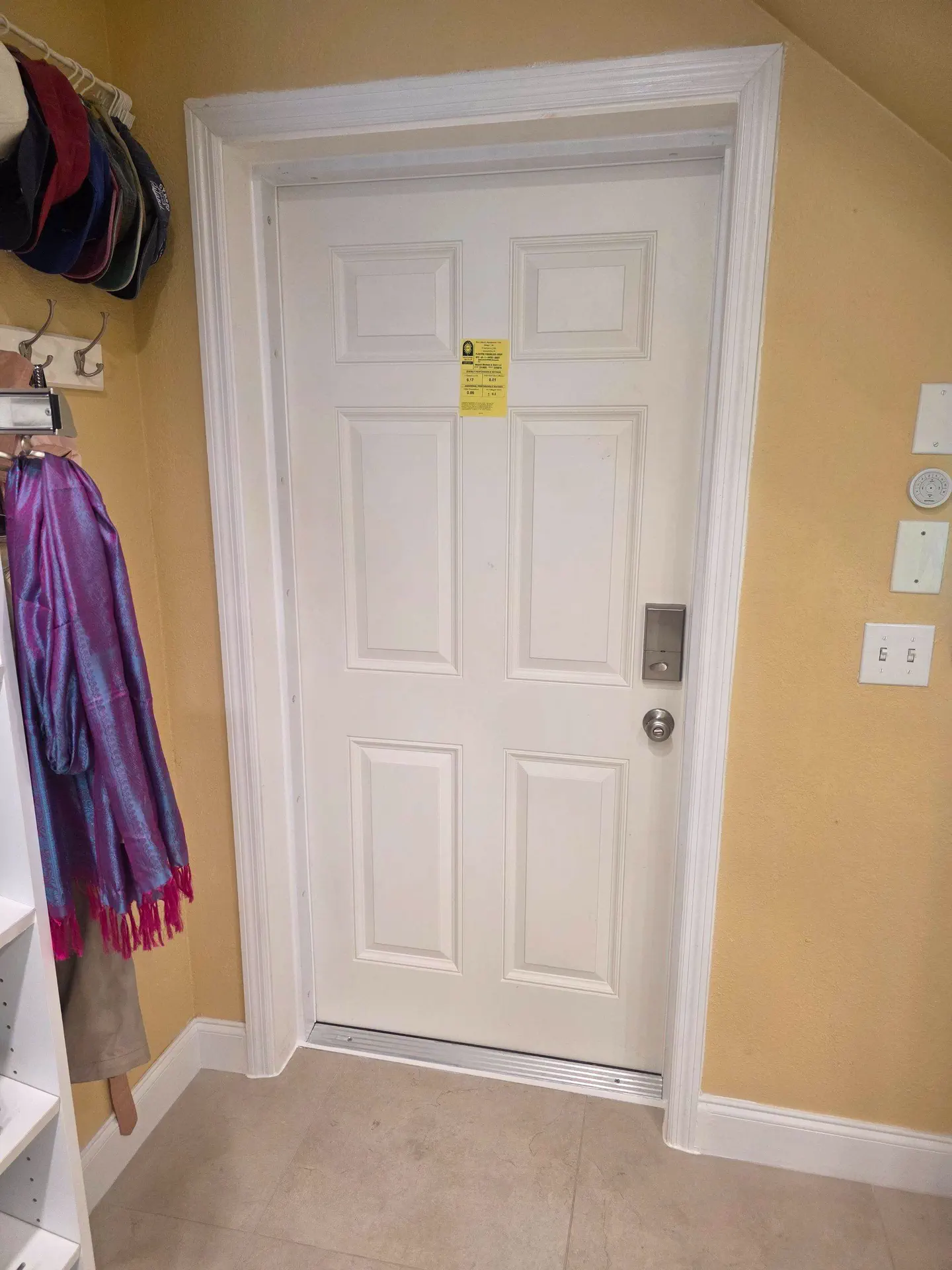
Debris Does Not Aim for Windows
Storm debris can hit any exposed glass in its path. Patio furniture, tree limbs, roof pieces, and loose yard items can slam into a door with little warning. Large glass doors can take a direct hit simply because they cover so much open space.
Impact doors give those wide openings added protection when objects start flying. The glass is built to stay together better after impact instead of breaking apart like standard glass. That can help keep the doorway closed when the storm is at its worst.
Door Tracks Need Storm-Level Support
Sliding door tracks do more than help the panels glide open and closed. During a storm, they also help keep those heavy panels sitting where they belong while wind pushes against the opening. A weak or damaged track can make the whole system less stable when pressure starts building.
Impact doors in Seminole, FL, are designed so the track, frame, glass, and hardware work as one unit. Each part supports the next rather than carrying the load alone. When the track stays firm, the door has a better chance of staying lined up and secure during rough weather.
Storm Load Chain Animation
Follow how storm pressure moves through the glass, frame, hardware, and track of a sliding impact-door system.
- 1Storm pressure first reaches the glass.
- 2Load passes from the glass into the frame around it.
- 3The frame passes load on through the hardware.
- 4Load continues into the track, completing the door system.
GlassStorm pressure first reaches the glass, marked 1.
Read this animation as text
- Glass (1): storm pressure first reaches the glass panel.
- Frame (2): load passes from the glass into the frame around the opening.
- Hardware (3): the frame passes load on through the hardware.
- Track (4): load continues into the lower track.
- No single part should be expected to carry the entire load alone. The complete door system works together.
This is a simplified educational load-path visual, not an engineering model. It assigns no pressure values or ratings.
Why it matters: storm pressure moves through several parts of a sliding impact-door system, so no single part should be expected to carry the entire load alone.
Close the Gaps With Impact Doors in Seminole, FL
Storm protection should cover more than the windows. Large glass doors, frames, tracks, and locks all need to handle wind pressure and flying debris. Mitchell Windows and Doors can help protect these major openings with impact doors built for rough weather.
Ask About Impact Doors
Tell us about your doors and a local Mitchell Windows and Doors team member will follow up.
Frequently Asked Questions
The frame helps keep the impact door secured when wind pushes against the opening. Glass, anchors, tracks, and hardware all need to work together for the system to perform as intended.
Large patio doors give wind and flying debris a wider surface to hit. Open yards, pools, and lanais can also leave these doors with less protection from surrounding walls.
Yes, worn or damaged tracks can affect how well a sliding door stays seated and aligned. Impact door systems use tracks and frames designed to support the panels when storm pressure builds.
Yes, the locking system helps keep the door closed when wind pushes against the panels. Poor alignment or weak hardware can allow unwanted movement even when the glass remains intact.
Sliding glass doors, patio doors, and entry doors with glass can all deserve attention. Any large exterior opening can become a weak spot if the rest of the home has impact protection and the door does not.